
 07971190613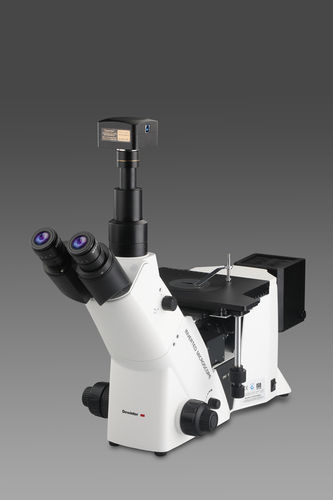
Inverted Metallurgical Microscope
35000.00 - 60000.00 INR
Product Details:
- Color Black And White
- Material Stainless Steel
- Application For Lab, School, Collage And Laboratory.
- Product Type INVERTED METALLURGICAL MICROSCOPE
- Click to View more
X
Inverted Metallurgical Microscope Price And Quantity
- 35000.00 - 60000.00 INR
- 100 Unit
Inverted Metallurgical Microscope Product Specifications
- Stainless Steel
- INVERTED METALLURGICAL MICROSCOPE
- For Lab, School, Collage And Laboratory.
- Black And White
Inverted Metallurgical Microscope Trade Information
- Telegraphic Transfer (T/T), Cheque
- 100 Unit Per Week
- 2-3 Days
- Carton Box.
- All India
Product Description
Backed by rich industry experience, we are engaged in offering our clients a wide assortment of superior quality INVERTED METALLURGICAL MICROSCOPE that is available in various technical specifications as per the specific needs of the clients. Further, the offered microscope is the most dependable and accurate instrument to observe metallographic images for mapping metallographic analysis. We offer this INVERTED METALLURGICAL MICROSCOPE at market leading prices within the committed time-frame.
Specification
| Mechanical Stage | 210mm X 180mm |
| Moving Range | 50mmX50mm |
| Interpupillary Distance | 53mm to 75mm |
| Eyepiece | 10X (paired) F.O.V. 22mm |
| Model Name/Number | DMI Victory |
| Brand | Dewinter |
Features
- Ergonomic design
- Excellent performance
- Clear image
- User friendly
DEWINTER INVERTED METALLURGICAL MICROSCOPE
MODEL DMI VICTORY
Trinocular Observation Head
- Siedentopf observation head inclined at 45
- Diopter adjustment ring on ocular tube 5
- Interpupillary distance from 53mm to 75mm
- Focusable vertical tube for Digital Microphotography
Eyepiece Anti fungus
Wide eld10X paired FOV 22mm
Objectives Innity corrected
- M Long working distance plan 5X
- M Long working distance plan 10X
- M Long working distance plan 20X
- M Long working distance plan 50X
- M Long working distance plan 100X SL Dry
Illuminator
EpiKoehler illumination Aperture iris diaphragm and field iris diaphragm 12V50W halogen lamp Adjustable brightness Filter wheel fixed in light path with blue green yellow filters
Mechanical Body
Coaxial focusing system with large knobs PREFOCUSING LEVER TENSION ADJUSTMENT RING
- Quintuple nosepiece on ball bearing
- Mechanical stage is 210mm X 180mm and moving range 50mmX50mm
- Mechanical stage has low positioned coaxial controls on ball bearing guide ways
- Upper port with phototube for micro photography
Standard Accessories
12V50W halogen tungsten bulb operating manual dust cover guarantee card and Styrofoam molded pack
Optional Accessories
PolarizingAnalyzer rotatable at 360 Polarizer Analyzer can be slide inout of the optical path
Precision Stainless Steel Construction
Crafted from high-grade stainless steel, this inverted metallurgical microscope is built to withstand the demands of frequent laboratory use, ensuring longevity and consistent performance for students and professionals alike.
Versatility in Application
Suitable for a range of environments including schools, colleges, and laboratories, this microscope is ideal for biological studies as well as metallurgical investigations, offering adaptability across multiple scientific disciplines.
FAQs of Inverted Metallurgical Microscope:
Q: How do I use the inverted metallurgical microscope without a built-in light source?
A: This microscope does not include an integrated light source, so you will need to provide external illuminationsuch as a separate LED or halogen lampto view your samples clearly from beneath the stage.Q: What are the main applications of this microscope in laboratories and educational settings?
A: It is well-suited for biological and metallurgical studies, making it useful for research, teaching demonstrations, and sample analysis in schools, colleges, and professional laboratories.Q: When should I choose an inverted microscope over an upright model?
A: An inverted microscope is ideal when examining samples at the bottom of petri dishes or flasks, or when analyzing large, unsectioned industrial specimens, as it allows viewing from below.Q: Where can this microscope be effectively utilized?
A: This model is designed for effective use in laboratories, school science departments, and college classrooms, providing reliable performance wherever detailed specimen analysis is required.Q: What is the construction material of the microscope and how does it benefit users?
A: The microscope is made from durable stainless steel, which offers strength, ease of cleaning, and excellent resistance to corrosion, ensuring long-term reliability in busy lab environments.Q: What is the function of the binocular drawtube in this microscope?
A: The binocular drawtube allows for more comfortable and prolonged viewing, reducing eye strain and enabling users to observe specimens with both eyes, which is particularly helpful during extended sessions.Tell us about your requirement

Price:
Quantity
Select Unit
- 50
- 100
- 200
- 250
- 500
- 1000+
Additional detail
Mobile number
Email

Other Products in 'Industrial Microscope' category


Inquiry Now
Contact Details

- 2/15, IIIrd Floor, West Patel Nagar, Main Patel Road, New Delhi - 110008, India
- Phone : 07971190613
- Mr. Rajiv Luthra (Director)
- Mobile : 07971190613
- Send Inquiry
 Send Inquiry
 Send Inquiry
 Send SMS
 Call Me Free
 |
DEWINTER OPTICAL INC.
All Rights Reserved.(Terms of Use) Developed and Managed by Infocom Network Private Limited. |
